
What is a Section 60I certificate?
A Section 60I certificate is a document issued by an accredited Family Dispute Resolution Practitioner under section 60I(8) of the Family Law Act 1975. Before applying for parenting orders in the Federal Circuit and Family Court of Australia, a party must in most cases file a Section 60I certificate. Without it, the court will not accept the application unless an exemption applies.
The certificate is not a product to be ordered. It is the formal outcome of a proper FDR process, and it is issued only after the practitioner has conducted the required intake assessment and, where appropriate, the FDR sessions themselves. The type of certificate issued depends on what occurred during that process. The practitioner decides, not the parties.
This is not a rubber stamp
A Section 60I certificate cannot be issued on request or as a shortcut to court. It requires a proper FDR process, including individual intake sessions with each party. The type of certificate issued is determined by what the process reveals, not by what either party wants. Issuing a certificate without a genuine process is a breach of the practitioner's statutory obligations.
Why the certificate exists
The certificate requirement exists because contested family law proceedings are expensive, slow, and adversarial. Parliament decided that separating families should be required to attempt a structured, professionally facilitated resolution process before the courts become involved. The certificate is the evidence that this attempt was made, or that there was a proper reason it could not be.
The requirement is not purely procedural. It reflects a clear policy intent: most parenting disputes can and should be resolved without a judge making decisions about a family's children. The certificate ensures that parties have genuinely tried, or that genuine reasons exist for why they could not.
From June 2025, under the Family Law Amendment Act 2024, the court has express power to reject a parenting application for filing if a Section 60I certificate is required and has not been filed. Skipping the certificate is no longer a procedural oversight that can be corrected later; it can stop the application reaching the court at all.
Section 60I vs Genuine Steps Certificate
Two different certificates govern access to the family court system. They are often confused, but they do different jobs and are issued by different people.
A Section 60I certificate is issued by an accredited Family Dispute Resolution Practitioner under section 60I(8) of the Family Law Act 1975 and Regulation 24 of the Family Law (Family Dispute Resolution Practitioners) Regulations 2025. It applies only to parenting applications under Part VII of the Family Law Act. The practitioner determines which type of certificate to issue based on what occurred in the FDR process.
A Genuine Steps Certificate is signed by the party themselves under Schedule 1 of the Federal Circuit and Family Court of Australia (Family Law) Rules 2021. It is required for every initiating application and response, parenting and financial. Schedule 1 Part 1 governs financial proceedings; Part 2 governs parenting proceedings. Where a matter involves both, both Parts apply. The certificate is filed with the application. Where a party is legally represented, the lawyer typically files the certificate alongside the rest of the application package, but the certifying signature remains the party's.
A third document is sometimes confused with these two but does a different job again. A Certificate of Dispute Resolution, under rule 8.12 of the Federal Circuit and Family Court of Australia (Family Law) Rules 2021, is not a pre-filing document. It is completed by the practitioner who conducts court-ordered dispute resolution after an application has already started, and records whether agreement was reached and whether each party attended and made a genuine effort. Because it belongs to a case already before the court, it can cover parenting and property together, which is why it does not cut across the parenting-only rule for Section 60I certificates.
What this means in practice
For a parenting application, a party files both: an FDRP-issued Section 60I certificate and a party-signed Genuine Steps Certificate. For a financial application, a party files only the Genuine Steps Certificate. For a combined parenting and financial application, all three documents apply.
Where financial FDR has been attempted, the practitioner cannot issue a Section 60I certificate for the financial matter. That certificate is reserved for parenting under Part VII. Instead, the practitioner provides a Letter of Attendance and Genuine Effort confirming the dates of attendance, whether each party made a genuine effort, and the outcome. The letter is supporting evidence the party can attach to or refer to in their Genuine Steps Certificate.
In Western Australia, the equivalent of a Section 60I certificate for parenting matters before the Family Court of Western Australia under state jurisdiction (unmarried parents) is a Section 66H certificate, issued under section 66H of the Family Court Act 1997 (WA).
The five certificate types under section 60I(8)
Section 60I(8) of the Family Law Act sets out five paragraphs under which a certificate can be issued. Each documents a different outcome. The practitioner issues the type that accurately reflects what occurred, and only that type. The 2025 regulations also updated the certificate template itself, which is set out in Schedule 1 of the Family Law (Family Dispute Resolution Practitioners) Regulations 2025.
60I(8)(a): the other party did not attend
Issued when the person seeking the certificate was prepared to attend FDR, but the other party refused or failed to attend. The non-attendance is recorded. A court may take this into account when making orders about referrals to FDR, and when considering whether to award costs.
Other party did not attend60I(8)(aa): FDR was not appropriate to conduct
Issued when the practitioner, after intake assessment, determines that conducting FDR would not be appropriate. The most common reasons are family violence, safety concerns, significant power imbalances, or inability to negotiate freely. Section 50 of the Family Law (Family Dispute Resolution Practitioners) Regulations 2025, which incorporates the matters listed in regulation 20(2), sets out what the practitioner must consider for the purposes of paragraph 60I(8)(aa).
Not appropriate to conduct60I(8)(b): attended and made a genuine effort
Issued when both parties attended and all attendees made a genuine effort to resolve the dispute. The certificate does not record whether agreement was reached. Parties who reach full agreement typically do not file applications for contested orders and would not file the certificate; this type is most often filed when parties resolved some matters but go to court on others, or when no agreement was reached despite genuine effort.
Attended, genuine effort60I(8)(c): attended but did not make a genuine effort
Issued when one or more attendees did not make a genuine effort to resolve the dispute. The assessment is made by the practitioner. A court may take this into account in subsequent proceedings, including when deciding costs orders.
Did not make a genuine effort60I(8)(d): FDR began but was not appropriate to continue
Issued when FDR commenced but the practitioner determined, after sessions began, that it would not be appropriate to continue. This typically reflects safety concerns or other prescribed matters that emerged during the process rather than at intake.
Not appropriate to continueThere is no "partial agreement" certificate
A common misconception is that there is a certificate type for parties who reached agreement on some issues but not others. There is not. Section 60I(8) certifies whether a party attended and whether each party made a genuine effort. Whether agreement was reached is not what the certificate documents. Parties who reach partial agreement can record it in a Parenting Plan and bring the unresolved issues to court alongside a certificate under 60I(8)(b) or (8)(c).

The practitioner's role
Issuing a Section 60I certificate is a professional decision, not an administrative one. The Family Law Act and the Family Law (Family Dispute Resolution Practitioners) Regulations 2025 require the practitioner to make an independent assessment of what occurred in the process and to issue the certificate type that accurately reflects that assessment.
This means the practitioner is required to exercise professional discretion when deciding:
- Whether a party made a genuine effort to resolve the dispute
- Whether FDR was, or became, inappropriate in the circumstances
- Which paragraph of section 60I(8) applies to the matter
The practitioner's assessment is not subject to negotiation by the parties. Neither party can request a particular type of certificate, and the practitioner cannot agree to issue one type when the assessment supports another. The decision rests with the practitioner and is made in accordance with the practitioner's professional and statutory obligations.
What changed on 1 April 2025
The Family Law (Family Dispute Resolution Practitioners) Regulations 2025 commenced on 1 April 2025, replacing the 2008 Regulations. Schedule 1 of the new regulations contains an updated Section 60I certificate template, which all FDR practitioners are required to use for certificates issued from that date. The new template is issued to a single person rather than to the couple, scopes the certificate to the specific matters in dispute that the parenting order would deal with, and requires the practitioner to record their name, registration number, and the date of the last attempted or actual attendance at FDR. Certificates issued in the 12 months before 1 April 2025 using the old template continue to be accepted by the court.
Validity and who receives the certificate
Each party can request a certificate. Each party receives their own certificate, issued in their name. Under the 2025 regulations, the certificate is now addressed to a single person rather than to the couple jointly.
A certificate must not be issued more than 12 months after the person's last attendance, or attempted attendance, at FDR. Once issued, a certificate is generally relied on by the court for filings made within 12 months. If proceedings are not commenced within that window, a fresh attempt at FDR is required.
A note for Western Australia
Western Australia has its own Family Court that exercises both Commonwealth and state jurisdiction. Section 60I certificates apply where the matter is filed in the Family Court of WA exercising Commonwealth jurisdiction (typically where the parties were married). Section 66H certificates under the Family Court Act 1997 (WA) apply where the FCWA exercises state jurisdiction (typically never-married parents in WA). Accredited FDR practitioners issue both where required. Clients in WA are welcome; the process is the same.
Exemptions from the FDR requirement
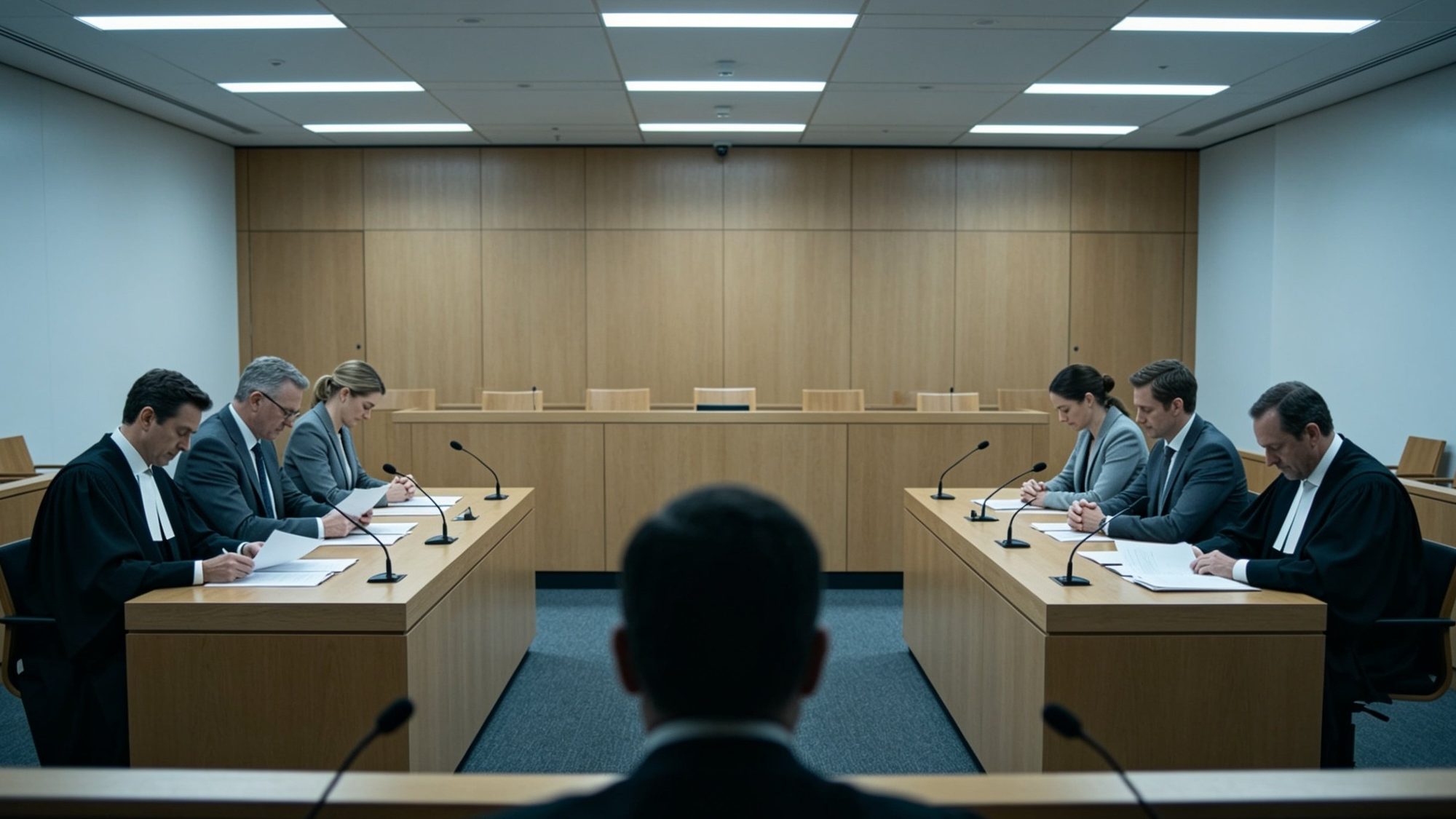
Certain circumstances exempt a party from the requirement to obtain a Section 60I certificate before applying for parenting orders. Exemptions are not automatic and must be established to the court's satisfaction. From June 2025, under the Family Law Amendment Act 2024, the court has express power to reject a parenting application for filing if a certificate is required and has not been filed.
The exemptions include circumstances where there are reasonable grounds to believe a party has engaged in family violence or child abuse, where there is a risk of family violence or child abuse if there is a delay, where the application falls within one of the urgency-related grounds set out in s60I(9) such as risk of family violence or child abuse if there is a delay in applying, where a party is unable to participate effectively due to incapacity or remoteness, and where the application is for Consent Orders or in response to another party's application.
Where there are reasonable grounds to believe family violence or child abuse, the court applies the exemption carefully. It recognises both the genuine need to protect victims and the potential for the exemption to be misused. The 2025 regulations require the FDR practitioner to consider prescribed matters at intake to identify these risks early, and where appropriate to issue a certificate under 60I(8)(aa) rather than conducting FDR that is not safe to proceed.
If you or your children are not safe
If you are experiencing family violence, or are concerned about the safety of a child, support is available. The Get Help page lists national crisis and family violence services that operate independently of this practice. In immediate danger, call Triple Zero (000).
What happens after the certificate is issued
Once a Section 60I certificate is filed alongside an application for parenting orders, the matter enters the court system. The certificate documents what occurred in the FDR process without disclosing the content of discussions, which remain confidential.
The type of certificate filed can affect the court's assessment of each party's conduct. A party who receives a certificate under 60I(8)(c) (did not make a genuine effort), or whose non-attendance led to a certificate under 60I(8)(a), may find their conduct noted and potentially reflected in costs orders under section 114UB of the Family Law Act.
Confidentiality and inadmissibility
FDR is protected by two distinct provisions of the Family Law Act. Confidentiality under section 10H prevents the practitioner from disclosing what was said in the process, with limited exceptions, and parties agree contractually under our terms to maintain the same confidentiality. Inadmissibility under section 10J goes further: even if confidentiality is breached and something is disclosed, that information cannot be admitted as evidence in court proceedings. The certificate documents the outcome of the process, not its content.